Blue Hour
Presentation
From Hildegard of Bingen to Philippe Hersant, from Hartmann to Shostakovich, L’Heure Bleue brings together works separated by centuries yet united by the same question: how, in the heart of darkness, can we continue to believe in light?
At the heart of the programme lies Karl Amadeus Hartmann’s deeply moving Concerto funèbre. Composed in 1939 by a musician fiercely opposed to Nazism, it is at once a cry of revolt, an act of resistance and a profound expression of faith in the future. Its darkness is answered by the visionary, luminous music of Hildegard of Bingen. Between these two worlds, Philippe Hersant’s Une vision d’Hildegarde forms a true bridge between mystical vision and visions of hell, while Shostakovich extends this tension through the visceral power of his Two Pieces for String Octet.
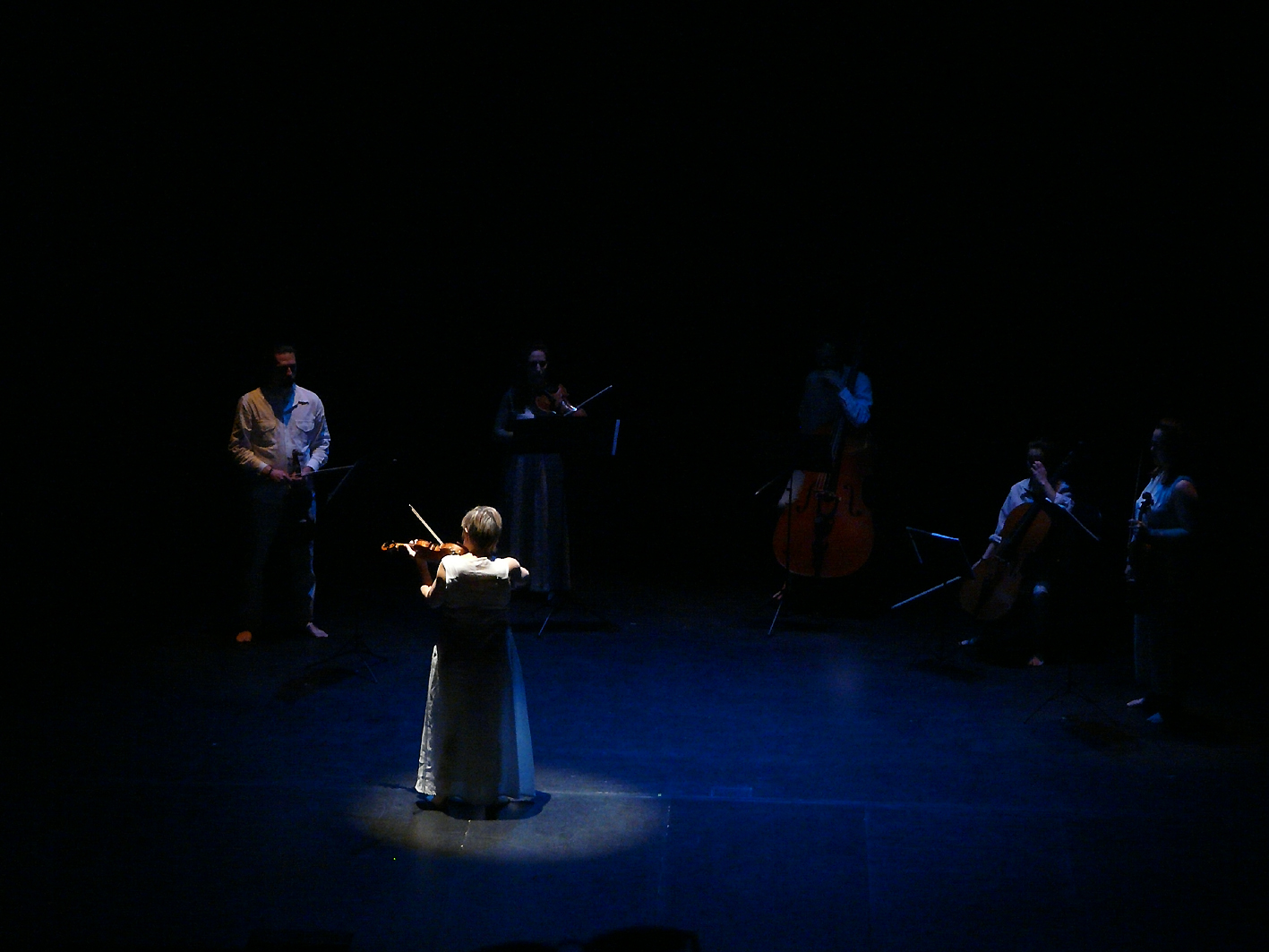
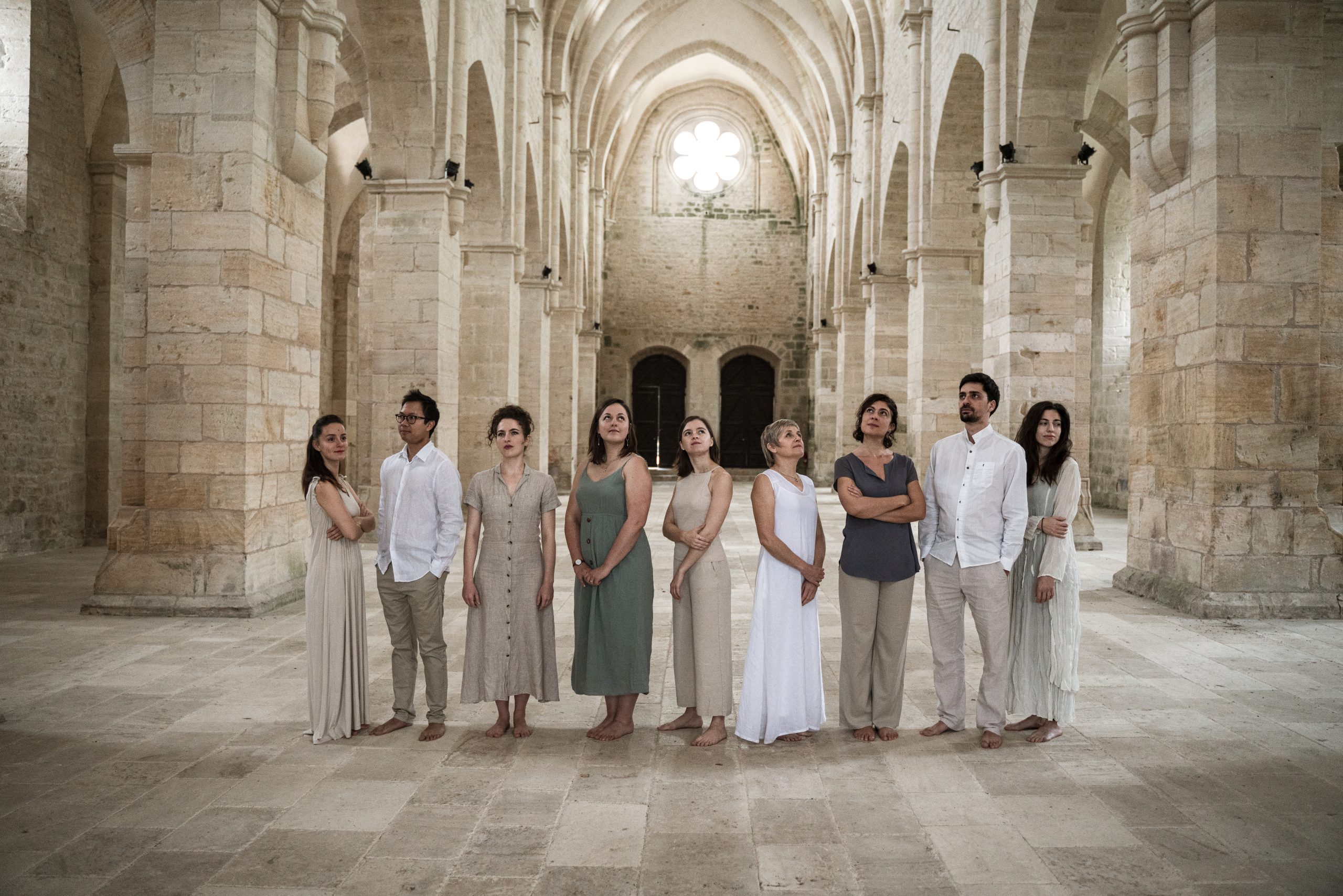
In a stripped-back staging, nine musicians move through a soundscape of silence and light. Like the blue hour — that fragile moment between the ending night and the dawning day — the performance creates a suspended sense of time, at the precise instant when night still hesitates before giving way to light.
In Hartmann’s Concerto funèbre**, Marianne Piketty is irresistible… Inspired by a string ensemble with real power (Le Concert Idéal) and by a violinist gifted for musical journeys (Marianne Piketty), Philippe Hersant delivers here one of his most accomplished works.
Le Monde
Already 15
performances.
Accès pro
Program
Hildegarde de Bingen
O Magne Pater
Rex Noster Promptus Est
Vos Flores Rosarum
Philippe Hersant
Une vision d’Hildegarde
Dmitri Shostakovich
Two Pieces for String Octet, Op. 11
Karl Amadeus Hartmann
Concerto funèbre
Artistic team
Violon et direction
Marianne Piketty
Mise en espace et en mouvement
Olivier Fourés
Création lumière
Thomas Jacquemart
Size of the orchestra
9 musicians
Listen
Listen onlineRecord
L’Heure Bleue
Evidence Classics. Nominated to the Victoires de la Musique Classique 2021 in the Recording category. — 2020
Buy this record